
The Science of Photo-Oxidation
Pure, unrefined botanical oils and active essential extracts are alive. Rich in essential fatty acids, polyphenols, and natural vitamins, they are incredibly effective on the skin — but they are also sensitive to ultraviolet (UV) light.
When natural oils in clear glass or plastic are exposed to ambient sunlight or bathroom lighting, UV rays spark a chemical process called photo-oxidation. Light energy breaks carbon bonds in unsaturated fatty acids, creating unstable free radicals; those free radicals then react with more fatty acid molecules in a chain reaction, generating the same peroxides and aldehydes responsible for that "off," rancid smell in old cooking oil. The process degrades active compounds, turns beneficial fatty acids rancid, and destroys the soothing power of cold-pressed oils long before you finish the bottle.
Filtering Harmful Light Waves
Amber glass owes its color to iron, sulfur, and carbon compounds fused into the glass itself, which absorb light instead of letting it pass through. According to industry testing on amber glass and UV protection, this blocks the majority of UV wavelengths in the 290–400nm range and a large portion of the violet/blue light up to roughly 450nm — the same part of the light spectrum most responsible for oxidizing botanical oils. Clear glass and plastic offer close to none of that filtering.
What Actually Happens to an Unprotected Oil
This isn't a small, theoretical difference. Highly volatile compounds like citrus terpenes are especially vulnerable — packaging industry testing has measured citrus-based oils losing around 40% of their limonene content after just 60 days in clear glass, compared to under 10% loss in amber glass over the same period. The same testing found oils in clear containers degrading roughly three times faster overall than the same oil in amber glass under ordinary ambient light — no direct sun required, just a bathroom shelf.
For a small-batch formula with no synthetic stabilizers, that difference is the whole reason the product still works by the time you get to the last few drops.
Why Glass over Plastic Containers
Mass-market skincare brands often rely on clear plastic packaging due to lower shipping costs. However, plastic poses serious compromises for natural botanical formulas:
4 Reasons Amber Glass Superiority
- Zero Microplastic Leaching: Essential oils are natural solvents that slowly degrade plastic walls, leeching micro-compounds into your product. Glass is completely inert.
- Zero Chemical Preservatives Needed: UV filtering allows us to eliminate synthetic stabilizers like phenoxyethanol or parabens.
- 100% Infinitely Recyclable: Glass can be remelted and reused indefinitely without losing purity or quality — unlike most cosmetic plastic, which is rarely recycled in practice even when the symbol says it can be.
- Apothecary Freshness: Preserves the handcrafted batch quality from our Calgary studio to your vanity.
Does Bottle Colour Actually Matter?
Not all tinted glass performs the same. Cobalt blue bottles are popular for their look, but blue glass filters a narrower slice of the spectrum than amber and is far more about aesthetics than protection. Green glass sits somewhere in the middle. Amber remains the standard across pharmacies and apothecaries specifically because iron-oxide amber glass blocks the broadest, most relevant range of light for oxidation-prone oils — which is why we chose it over a prettier but less protective colour.
Getting the Most Out of Your Bottle at Home
Amber glass does most of the work, but where you keep the bottle still matters:
- Skip the sunny windowsill: even amber glass isn't a substitute for staying out of direct sunlight for weeks at a time.
- Keep the cap on tight between uses: oxygen exposure, not just light, contributes to rancidity.
- Store somewhere cool: heat speeds up the same oxidation reaction that light triggers — a bathroom cabinet away from a hot shower beats an open shelf right beside it.
- Trust your nose: a sharp, "crayon-like" or sour smell replacing the usual botanical scent is the clearest sign an oil has turned; that's your cue to replace it rather than keep using it.
Frequently Asked Questions
How long do Luna Fresh products stay fresh once opened?
Most of our oil-based formulas hold their quality for about 6 to 12 months after opening when stored properly in their amber glass, though we recommend using any opened product within a year for the best results.
Can I reuse my empty amber glass bottles?
Yes — clean, inert glass is one of the few packaging materials safe to reuse for another oil-based product, as long as it's thoroughly washed and fully dried first.
Is amber glass better than airless pump packaging?
They solve different problems. Airless pumps limit oxygen exposure but don't block light on their own; amber glass blocks light but relies on you keeping the cap sealed to limit oxygen. For a simple dropper bottle, amber glass with a snug cap remains the most practical combination of both.
Our Commitment to Small-Batch Integrity
Because every jar and serum bottle at Luna Fresh is filled by hand in Calgary, using amber glass ensures that the very first drop you apply is as fresh, active, and alive as the day it was made.
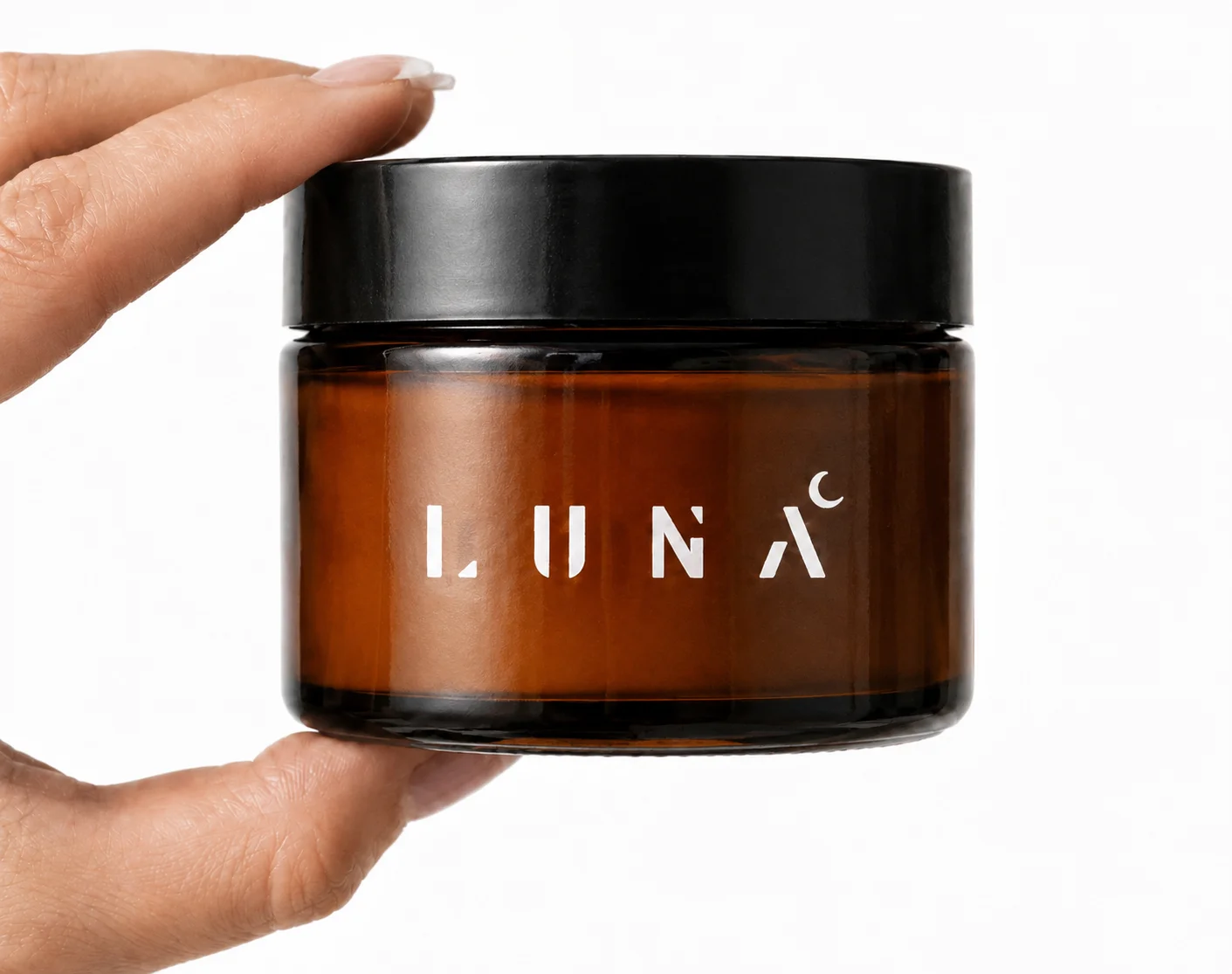
When you hold a Luna Fresh amber glass bottle, you are holding a formula protected with intention — honoring traditional apothecary wisdom and modern skin science.
Experience Fresh, Protected Botanicals
Every Luna Fresh product is packaged in protective amber glass, ensuring maximum botanical potency for sensitive skin.
Shop Amber Glass SkincareAbout the Author: Luna Fresh
Iris & Mireya are the Co-Founders and Formulators behind Luna Fresh. Driven by family heritage and a mother's journey with sensitive skin, they combine South American botanical traditions with small-batch craftsmanship to create skincare that is 100% honest, transparent, and synthetic-free.